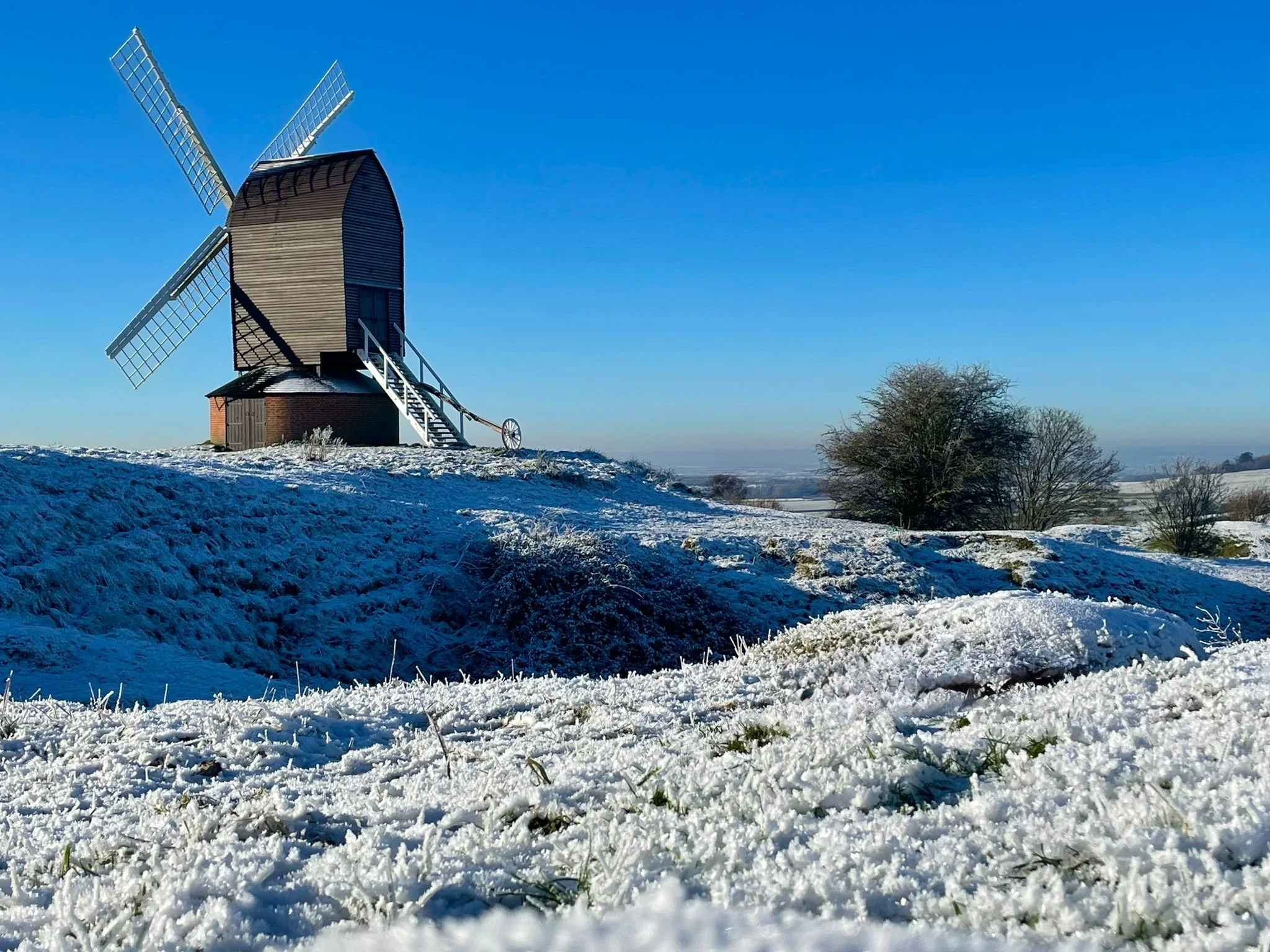
Brill Windmill
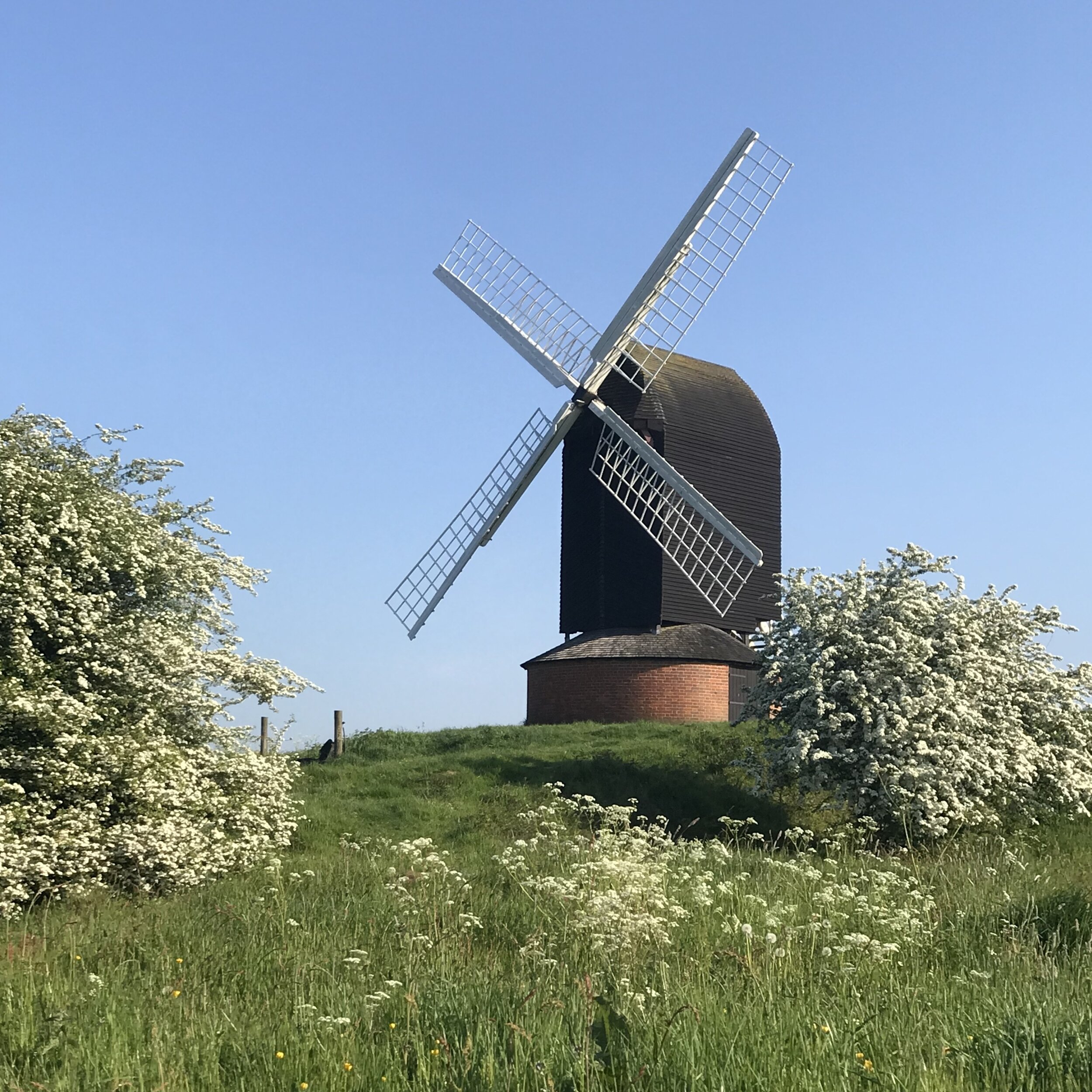
Spring
Is Brill Windmill the most photographed windmill in England?! Top of a hill, west-facing, close to the road. The foreground of a thousand sunsets from the deck of the pub; the background to a daily dozen of sweaty cyclist selfies. The inspiration for every logo within 20 miles. Yep, Brill Windmill!
Brill Windmill is owned by Brill Parish Council and is managed, maintained and opened to the public by The Brill Society, a registered charity. It’s a post mill dating from around 1680, although most of the structure has been replaced or rebuilt at one time or another (the most recent refurbishments were in 2009 and 2023). In days gone by, the miller would have manoeuvred the buck (the wooden superstructure) around to face the wind. This is now fixed in place but the sails can still turn - although we do this manually rather than leave the mill at the mercy of the wind.
Summer
The Brill Society opens the windmill to the public every Sunday from Easter to the end of September. Hours are usually 12.30 to 3.30pm - but bad weather or lack of volunteers can stop play on occasion. We charge adults £5 (2025) to go inside the windmill (children go free) - and the view through the tiny hidden windows at the top of the buck is worth every penny.
The roundhouse (the brick bit) contains the original massive beams whilst upstairs you can see the millstone, drive shaft, grinding mechanism and various cogs and pulleys. There’s notices to help you understand what it’s all about and the volunteers will be delighted to answer your questions.
The sails are turned at noon on the last Sunday of every month during the Summer. This isn’t just a spectacular thing to watch; a change of position is crucial to ensure all four sails weather equally.

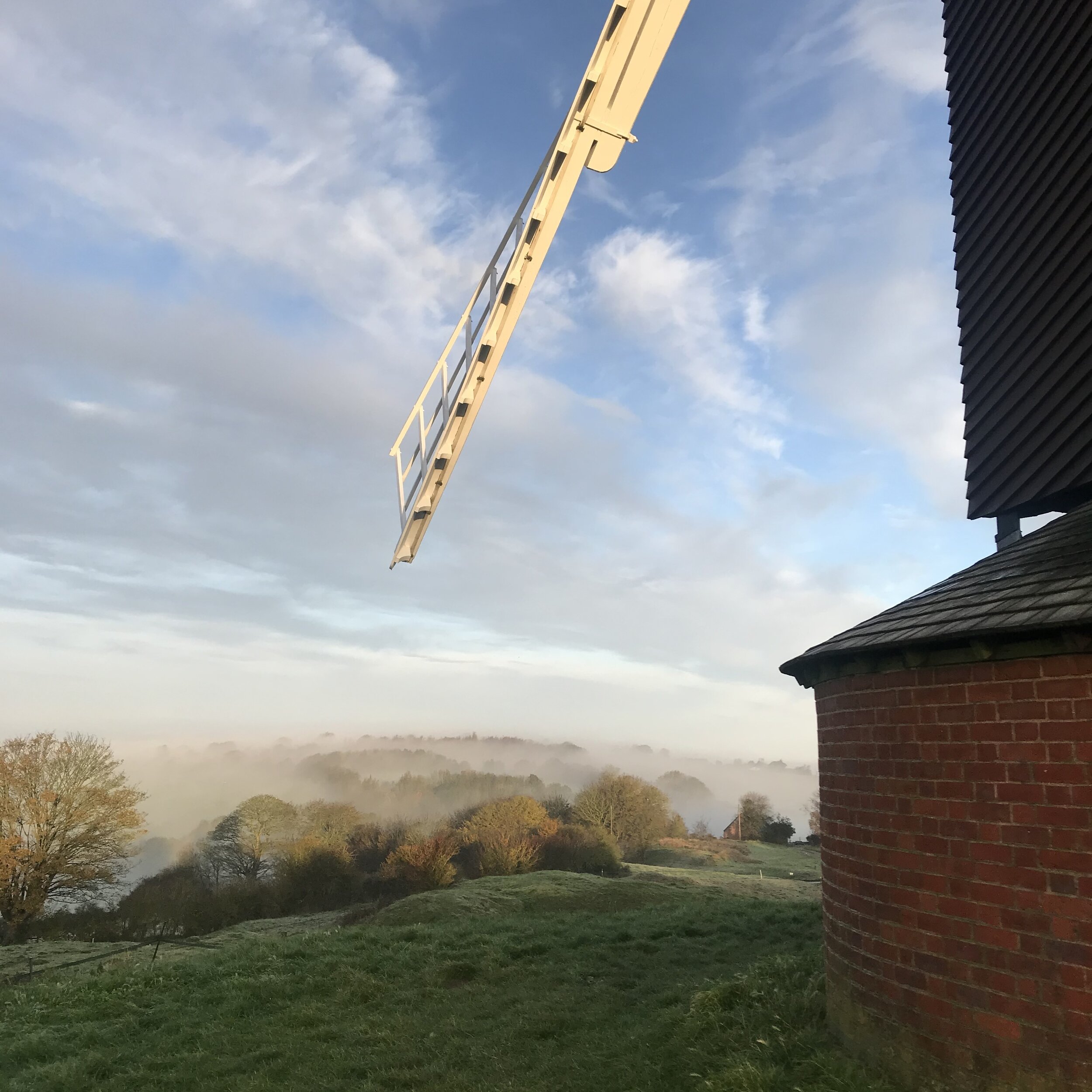
Autumn
The Brill Society sells a selection of books as well as mugs, coasters, pamphlets, postcards - and some nice quality tee-shirts. There’s a detailed technical guide to the windmill written by a mill expert who helped with the 2009 restoration, a large, glossy book of windmill images by Tim Andrew, a local photographer - and a couple of more general publications about Brill and its history, including A Portrait of Brill which portrays every dwelling in the village and the inhabitants at the time, and The Fields of Brill Parish, a lovingly-researched map giving the old names for the fields that surround our village. The village shops both sell a small range of windmill postcards, and themed greeting cards by local artists.
If you want to browse or buy when the windmill isn’t open, email The Brill Society.
Winter
The Brill Society is always looking for more volunteers to help open the windmill to the public. The afternoon is split into two shifts of 90 minutes each and what better thing to do on a Sunday afternoon than sit in the sun talking to kindly, interested visitors? You don’t have to live in the village - or know a lot about windmills - just have a friendly face. (We also need people to help clean and so on in the winter months.) Email The Brill Society if you’d like to get involved.
Of course, even when the windmill is closed, a trip up to Brill is a great afternoon out, be it kite-flying in November gales or tobogganing in January (yes, we do get more snow up here) - or just sitting by the fire in The Pheasant (website opens in new tab) or The Pointer (website opens in new tab). You could even speak to The Brill Society nicely about a private visit to the windmill (£20 recommended minimum donation). See you soon!
What’s caused the deep hollows near the windmill?
Everyone who comes to Brill asks this! The distinctive hollows surrounding the windmill are the result of clay mining from the 13th to late 19th centuries. The excavated Kimmeridge Clay was used to produce pots, tiles, and bricks.
The production of Brill pottery was a significant industry, with items distributed throughout southern England. There used to be several kilns in and around the village; here’s a nice geeky report about the excavation of one such kiln in 2010 (pdf opens in new tab).
Most older houses in Brill were built using local bricks. Brill bricks were also used further afield, notable Thame Grammar School and Waddesdon Manor (website opens in new tab).